
Domestic Violence & IPV: Understanding Abuse, Red Flags and Safety Planning
Abuse is a pattern of power and control—not only physical harm. Learn the forms it can take, red flags to notice, and how a personal safety plan can support safety and options.
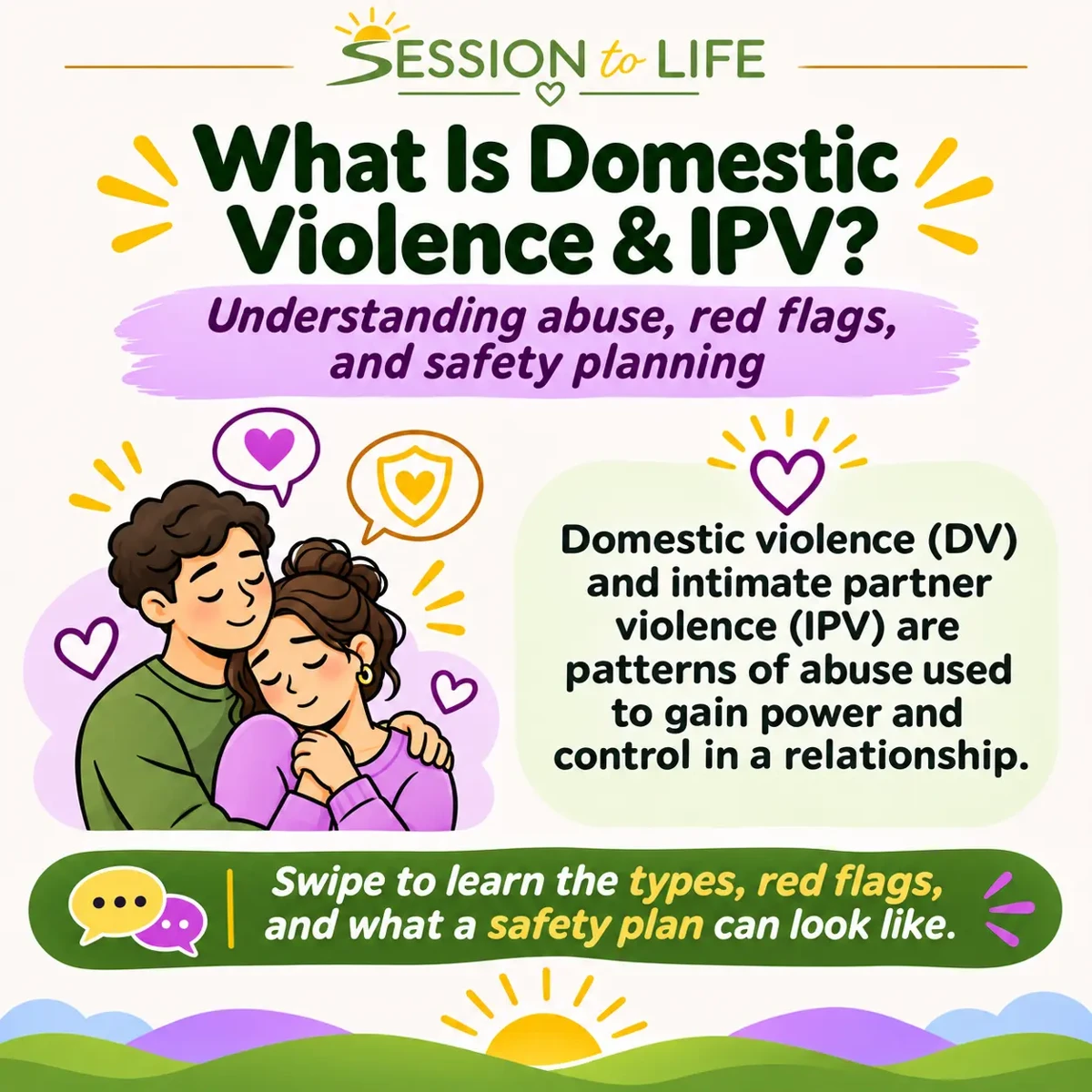
Key ideas
- Domestic violence (DV) and intimate partner violence (IPV) are patterns used to gain power and control in a relationship.
- Abuse is never the fault of the person experiencing it, and several forms can happen at the same time.
- A safety plan is personal, flexible and about options—not pressure to leave or stay.
What DV and IPV mean
Intimate partner violence happens between current or former partners. Domestic violence is often used more broadly for harm within a household or family. Both describe a pattern, not a single argument: one person repeatedly uses fear, pressure or harm to control another. Disagreements happen in healthy relationships too; what sets abuse apart is that one person feels unsafe, silenced or controlled.
Physical, sexual and emotional abuse
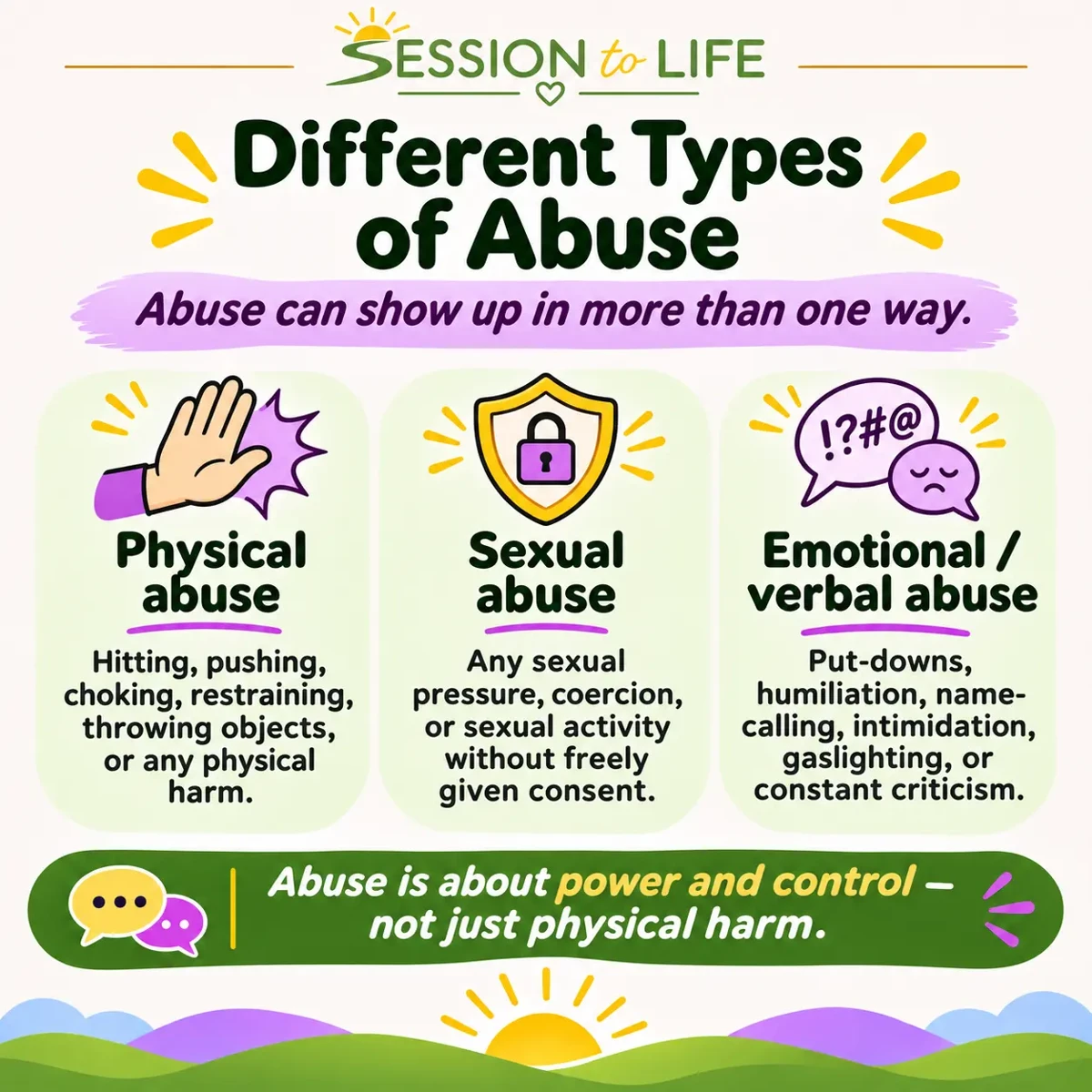
Physical abuse includes hitting, pushing, choking, restraining, throwing objects or any physical harm. Sexual abuse includes any sexual pressure, coercion or activity without freely given consent—including within a marriage or long relationship. Emotional or verbal abuse can look like put-downs, humiliation, name-calling, intimidation, gaslighting (making someone doubt their own memory or perception) or constant criticism. Emotional abuse leaves no visible marks, but its effects are real.
Financial, digital and coercive control
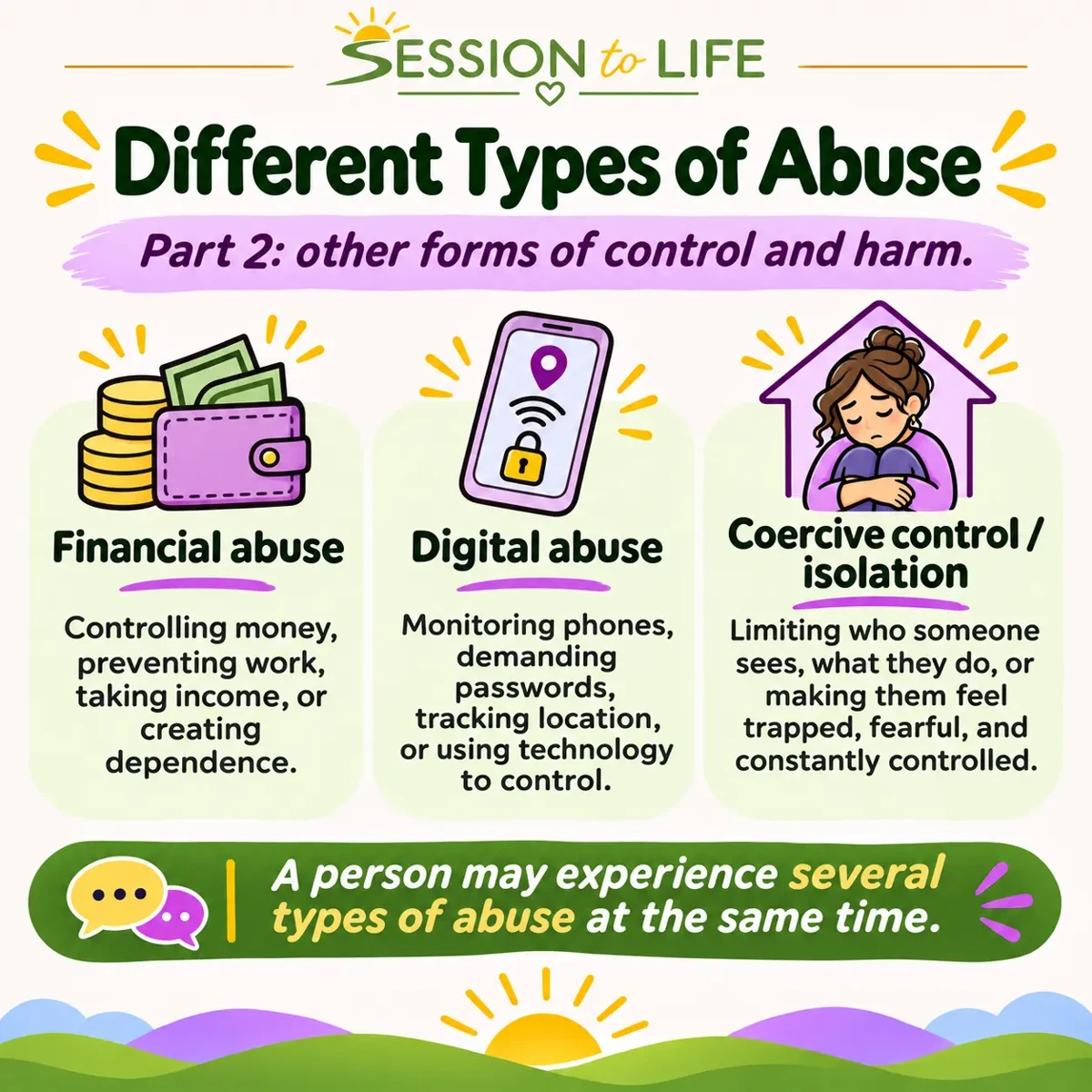
Financial abuse means controlling money, preventing work, taking income or creating dependence. Digital abuse includes monitoring phones, demanding passwords, tracking location or using technology to control. Coercive control and isolation limit who someone sees and what they do, leaving them feeling trapped, fearful and constantly watched. A person may experience several of these at once.
Red flags: trust patterns, not promises alone
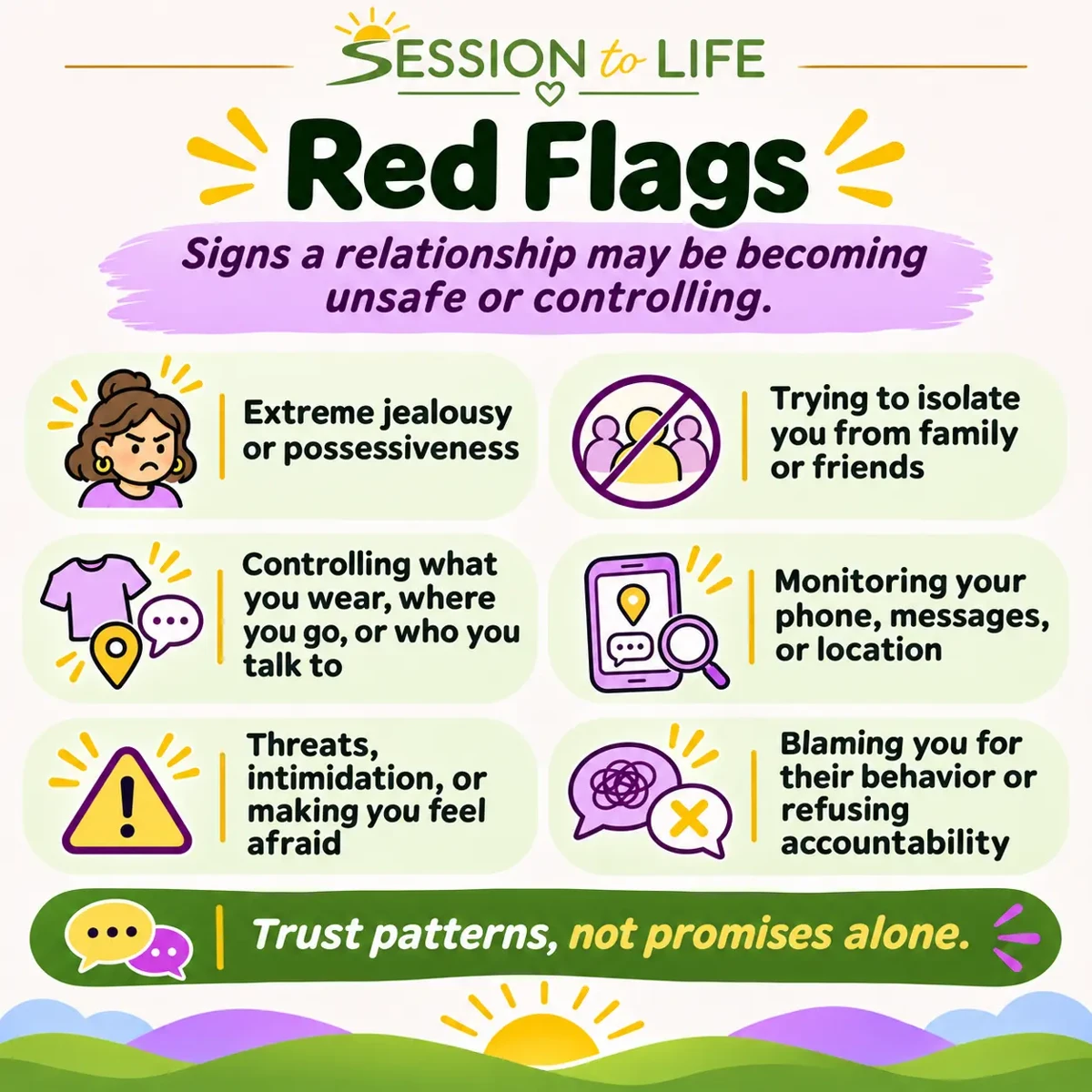
Signs a relationship may be becoming unsafe or controlling include extreme jealousy or possessiveness; trying to isolate you from family or friends; controlling what you wear, where you go or who you talk to; monitoring your phone, messages or location; threats or intimidation that make you afraid; and blaming you for their behavior or refusing accountability. Apologies and promises can be sincere in the moment, yet repeated patterns tell you more about safety.
What is a safety plan?
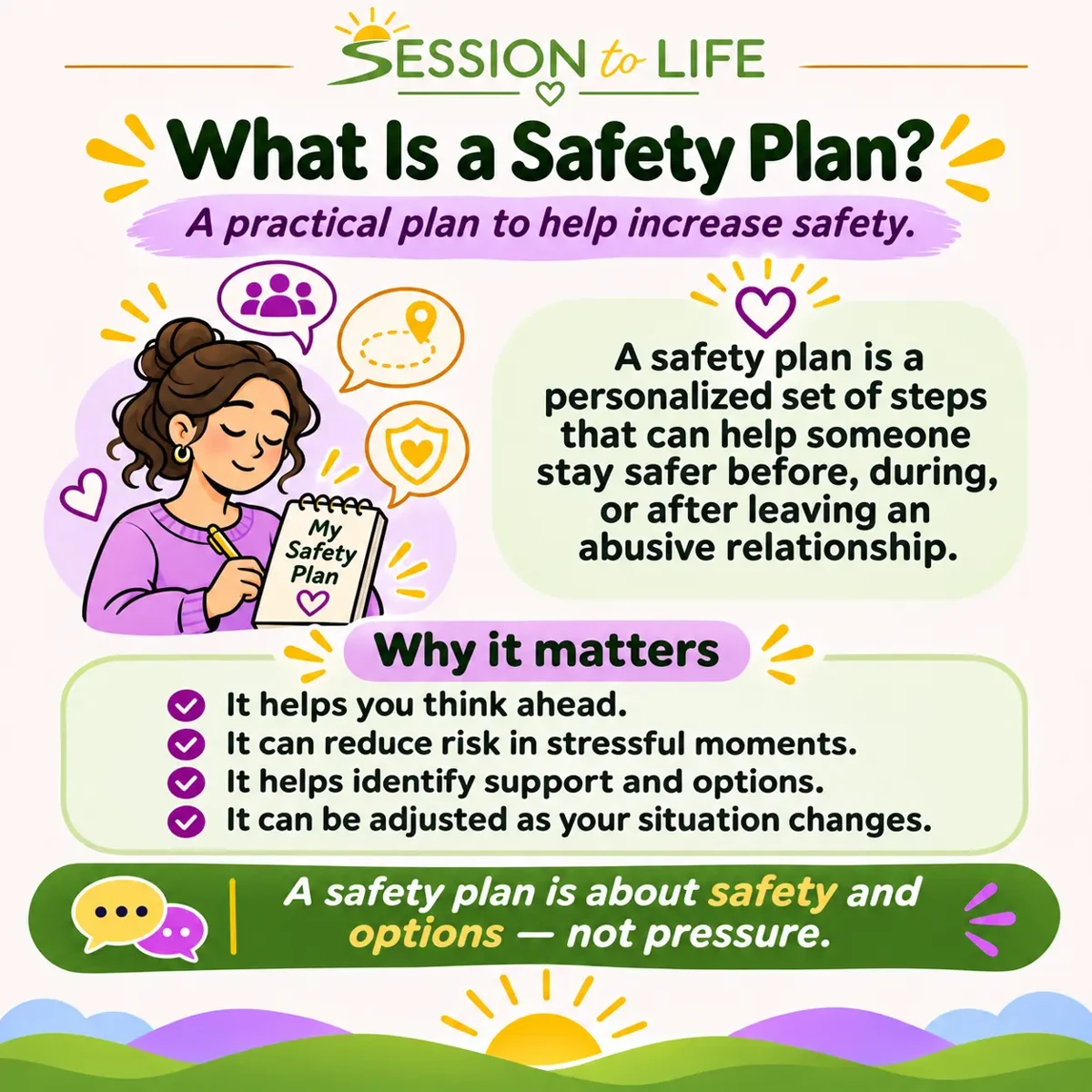
A safety plan is a personalized set of steps that can help someone stay safer before, during or after leaving an abusive relationship. It helps you think ahead, can reduce risk in stressful moments, identifies support and options, and can be adjusted as your situation changes. Because leaving can sometimes increase risk, plans work best when built with a trained domestic violence advocate who understands your circumstances.
What a safety plan can include
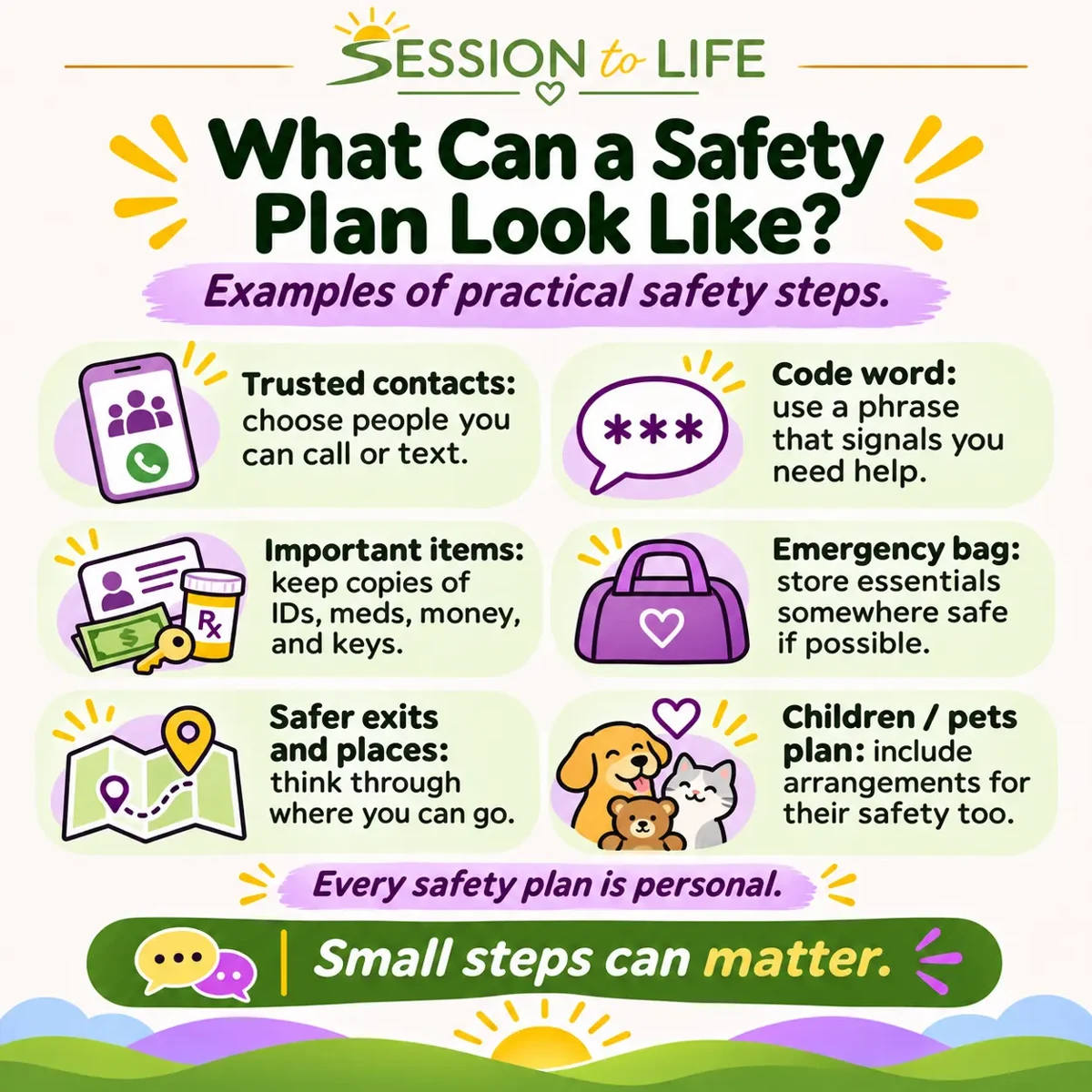
Examples include trusted contacts you can call or text; a code word that signals you need help; copies of IDs, medications, money and keys; an emergency bag stored somewhere safe if possible; safer exits and places you could go; and arrangements for children and pets. Every plan is personal—choose only steps that feel safe for you, and keep the plan private if your devices might be monitored. Small steps can matter.
A real-life example (hypothetical)
Imagine Ana notices her partner now checks her phone every night and gets angry when she visits her sister. She is not sure it is “bad enough” to ask for help. From a friend's phone, she contacts a hotline and talks with an advocate, who listens without pressuring her to decide anything. Together they agree on a code word with her sister and a safe place to keep copies of her documents. Ana is still deciding what comes next—and that is okay. Support is available whether someone stays, leaves or is undecided.
Support and safety reminders
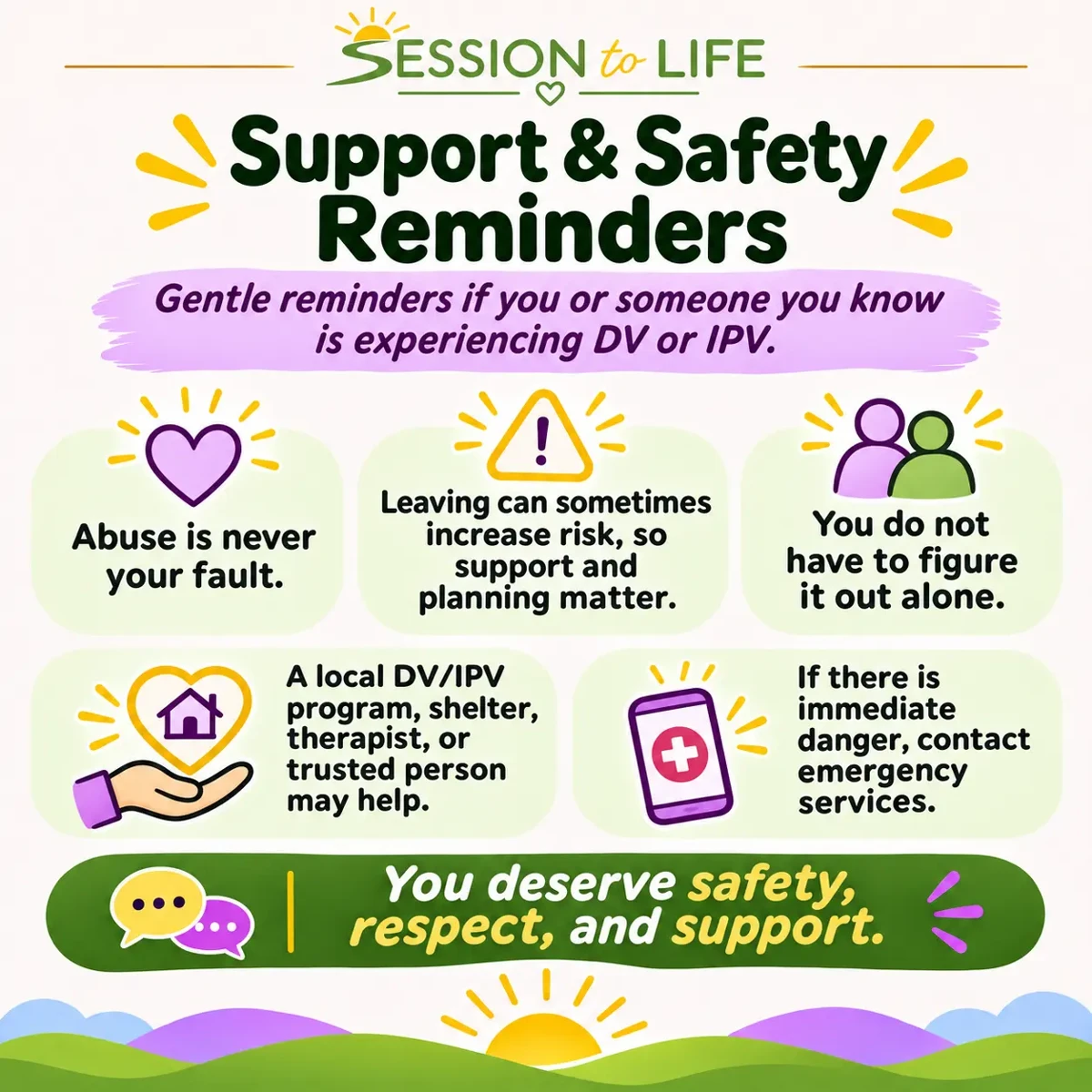
Abuse is never your fault. You do not have to figure this out alone: a local DV/IPV program, shelter, therapist or trusted person may help. You deserve safety, respect and support. In the U.S., the National Domestic Violence Hotline offers free, confidential support and safety planning 24/7: call 800-799-7233, text START to 88788, or visit TheHotline.org (Spanish available). Use a safer device if your phone or computer may be monitored. In immediate danger, call 911 or local emergency services. Outside the U.S., contact local emergency or domestic violence services.
Try this
Only if it feels safe: think of one person or service you could contact if you ever needed support, and note how you could reach them privately. You do not need to write anything down if your space or devices are monitored. Pause anytime.
The Story Behind Session to Life: Introducing My First Memoir
By Brenda Guevara Garcia, LCSW. Session to Life began with a belief that conversations about mental health should feel accessible, relatable, and human.
Now in English & Spanish editionsReadWhen DV/IPV Affects a Family: Partners, Children and Safety
Partner abuse can reach beyond the couple. Learn how children may be affected, which signs need urgent attention, what to know about child welfare, and how support before a crisis can help.
Read