
Physical Boundaries in Latino Culture
Staying respectful while honoring comfort and consent, for you and for your children.
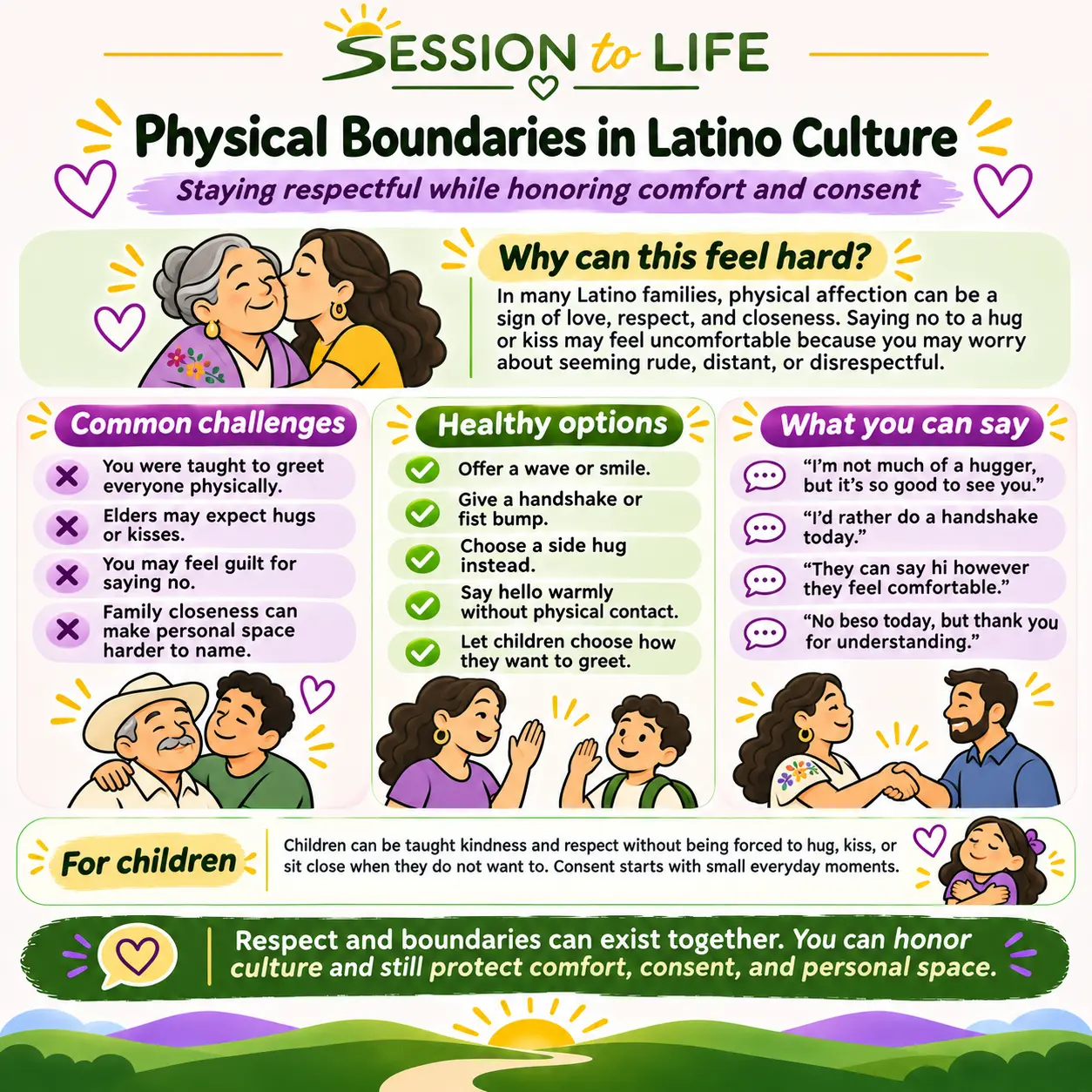
Key ideas
- In many Latino families, physical affection means love and respect.
- Saying no to a hug or kiss can bring guilt or fear of seeming rude.
- Respect and boundaries can exist together.
Why this can feel hard
Many of us were taught to greet everyone with a hug or kiss, and elders may expect it. Family closeness can make personal space hard to name, and you may feel guilty for saying no.
Warm alternatives
Offer a wave or smile, a handshake or fist bump, or a side hug. Say hello warmly without physical contact. Try: “I'm not much of a hugger, but it's so good to see you.” “I'd rather do a handshake today.” “No beso today, but thank you for understanding.”
For children
Children can learn kindness and respect without being forced to hug, kiss or sit close when they don't want to. Let them choose how to greet: “They can say hi however they feel comfortable.” Consent starts with small everyday moments.
Try this
Before your next family gathering, decide which greeting feels comfortable and practice one phrase out loud.
Time Boundary Scenario
A coworker asks you to stay late again, but you already feel stretched thin and need to go home.
ReadEnergy Boundary Scenario
Someone wants to keep talking and making plans, but you already feel mentally and physically drained.
Read