
Rigid, Porous and Healthy Boundaries
Three boundary styles, what each looks like, and how to move toward the middle.
Key ideas
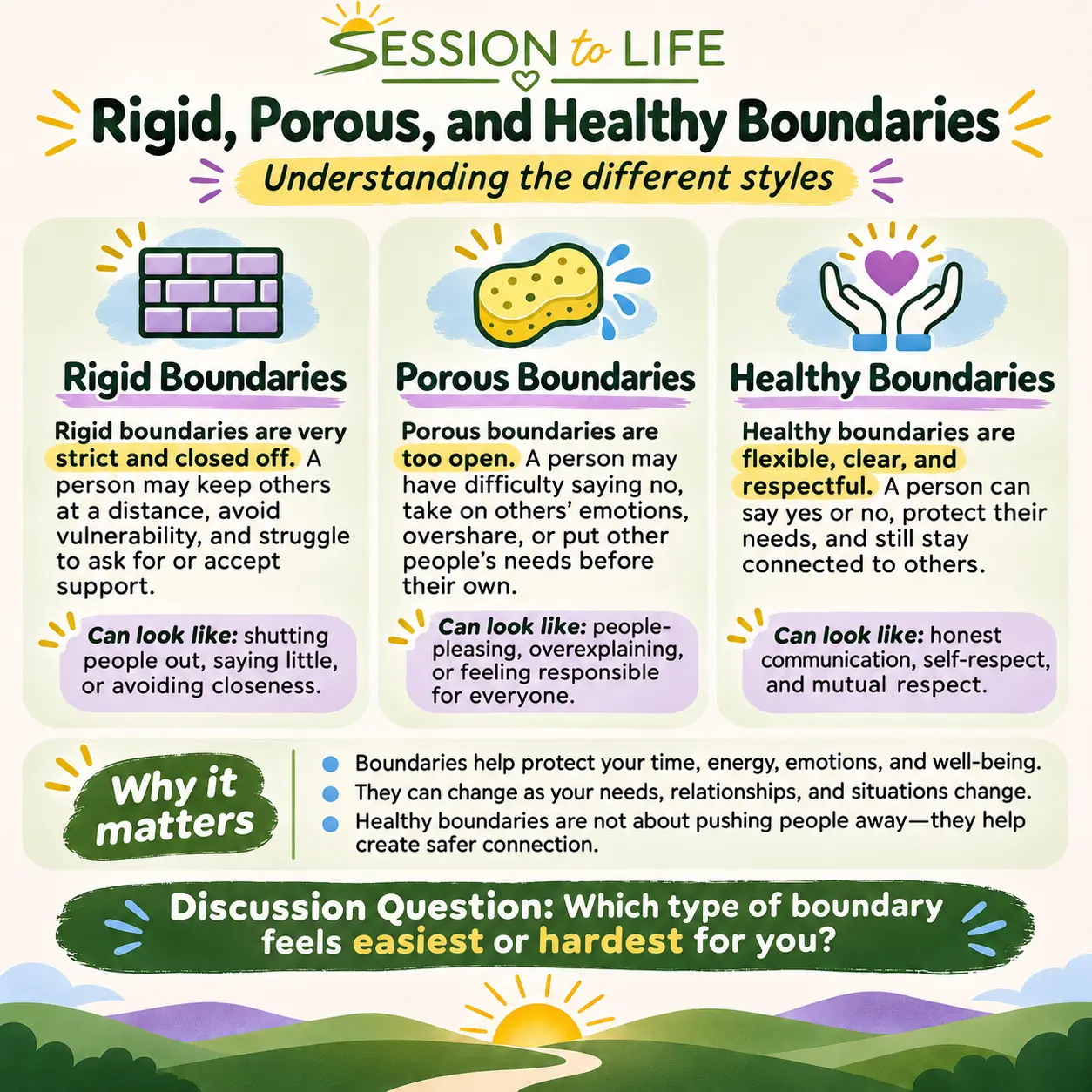
- Rigid boundaries are closed off; porous boundaries are too open.
- Healthy boundaries are flexible, clear and respectful.
- Most of us use different styles with different people.
Rigid boundaries
Rigid boundaries keep others at a distance. They can look like shutting people out, saying little, avoiding closeness, or struggling to ask for or accept help. Often they started as protection after being hurt.
Porous boundaries
Porous boundaries let too much in. They can look like people-pleasing, overexplaining, oversharing, taking on others' emotions, or feeling responsible for everyone. They often grow where love felt conditional on being helpful.
Healthy boundaries
With healthy boundaries you can say yes or no, protect your needs, and still stay connected. They change as your needs, relationships and situations change. If you tend to be rigid, practice letting one safe person in a little. If you tend to be porous, practice one small no.
Try this
Which style feels easiest for you, and which feels hardest? Think of one relationship where you'd like to move a step closer to healthy.
Time Boundary Scenario
A coworker asks you to stay late again, but you already feel stretched thin and need to go home.
ReadEnergy Boundary Scenario
Someone wants to keep talking and making plans, but you already feel mentally and physically drained.
Read