
Why Things Are Easier Said Than Done
Understanding the role of comfort, and how to move from staying stuck toward growth.
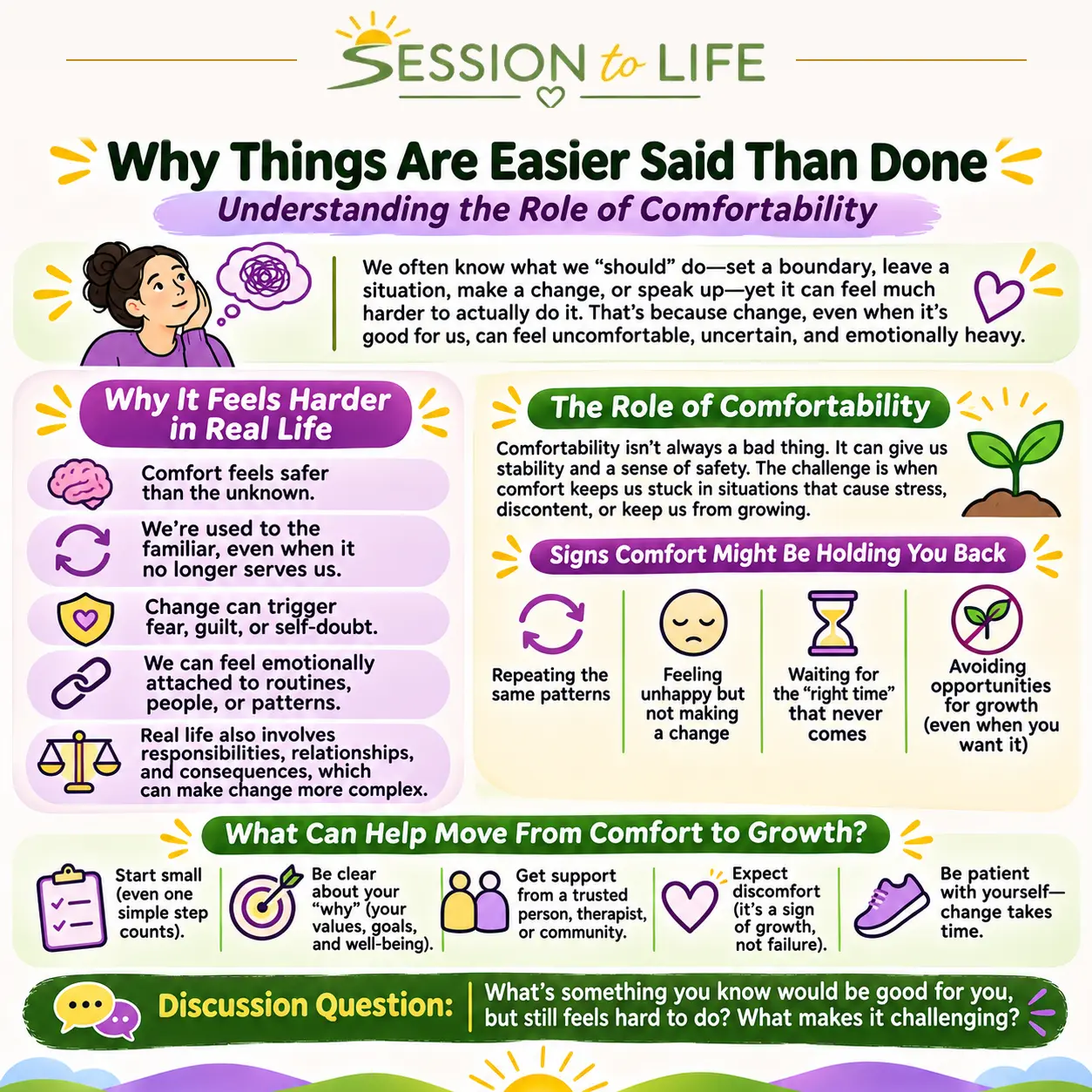
Key ideas
- Change, even good change, can feel uncomfortable and emotionally heavy.
- Comfort isn't bad; it becomes a problem when it keeps us stuck.
- Discomfort is often a sign of growth, not failure.
Why it feels harder in real life
Comfort feels safer than the unknown. We're used to the familiar, even when it no longer serves us. Change can trigger fear, guilt or self-doubt, and we can feel attached to routines, people or patterns. Real life also has responsibilities and consequences that make change more complex.
Signs comfort might be holding you back
Repeating the same patterns. Feeling unhappy but not making a change. Waiting for the “right time” that never comes. Avoiding opportunities for growth, even when you want them.
Moving from comfort to growth
Start small; even one simple step counts. Get clear about your “why”: your values, goals and well-being. Get support from a trusted person, therapist or community. Expect discomfort. And be patient with yourself, because change takes time.
Try this
What's something you know would be good for you, but still feels hard to do? Name what makes it hard, then write the smallest first step.
Time Boundary Scenario
A coworker asks you to stay late again, but you already feel stretched thin and need to go home.
ReadEnergy Boundary Scenario
Someone wants to keep talking and making plans, but you already feel mentally and physically drained.
Read