
Are You Living or Functioning? Understanding Survival Mode
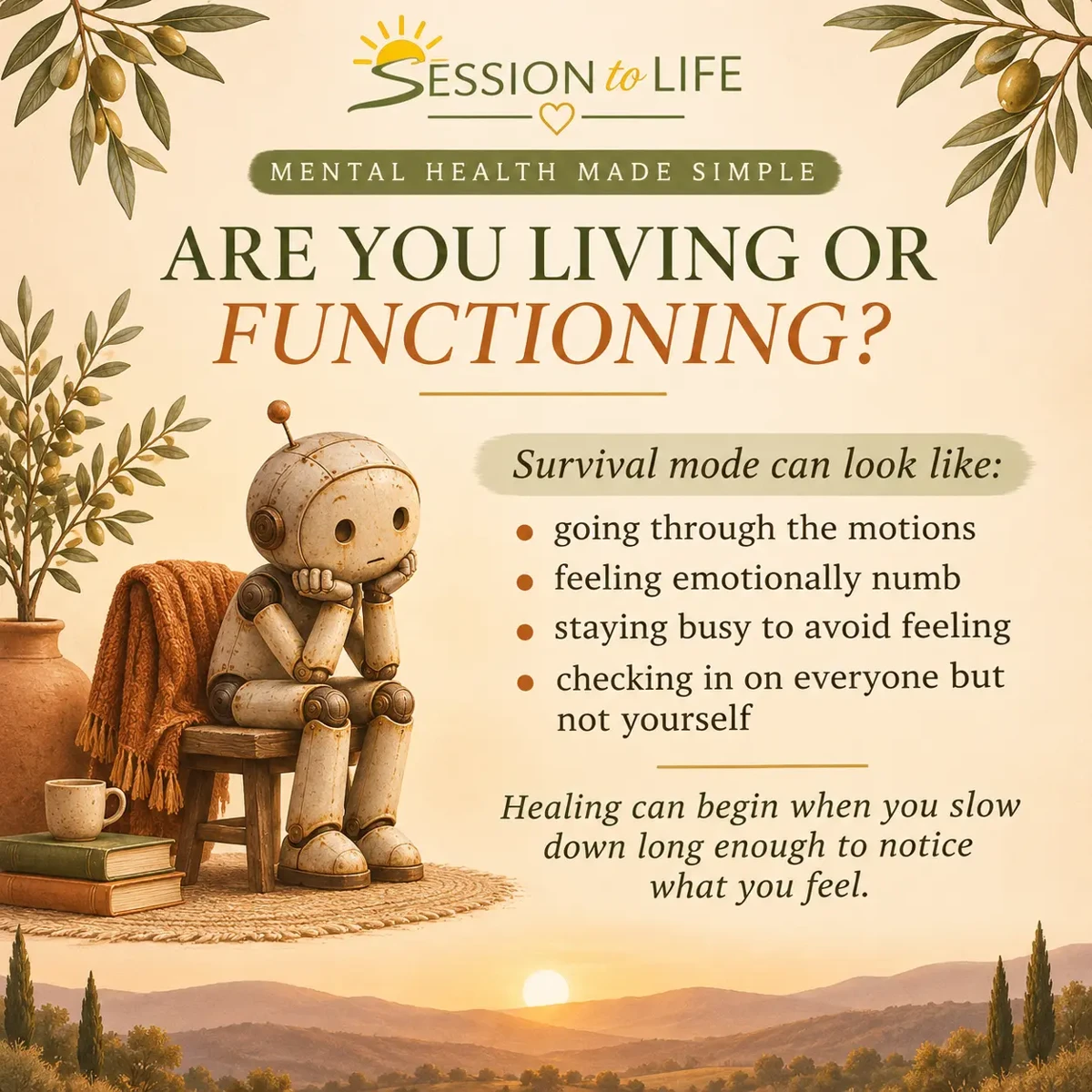
Survival mode can look like going through the motions, feeling numb or staying busy to avoid feeling. Healing can begin when you slow down long enough to notice what you feel.
Key ideas
- Survival mode is a protective response, not a personal failure.
- Signs can include going through the motions, emotional numbness, constant busyness and caring for everyone but yourself.
- Slowing down gently—at your own pace—can help you reconnect with what you feel.
What survival mode can look like
Survival mode can look like going through the motions, feeling emotionally numb, staying busy to avoid feeling, and checking in on everyone but yourself. During long periods of stress, loss or trauma, the mind and body may focus on getting through the day. That focus can be protective—it helped you keep going. But when it continues long after the pressure eases, life can start to feel like a list of tasks rather than something you are living.
Functioning is not failing
Getting through hard seasons is an accomplishment. Noticing that you are “just functioning” is not a reason for shame; it is information. It may point to unmet needs for rest, connection, joy or support. Healing can begin when you slow down long enough to notice what you feel—without rushing to fix it.
A real-life example (hypothetical)
Imagine Daniel, who fills every evening with work, chores and helping family. When things finally get quiet, he reaches for his phone. One night he tries pausing for two minutes with his eyes open, noticing his breath and asking, “What am I feeling right now?” The answer is “tired, and a little sad.” He doesn't solve anything—he simply notices, and decides to go to bed earlier.
When extra support may help
If numbness, exhaustion or disconnection last for weeks or make daily life hard, a qualified mental health professional can help you explore what is happening at a pace that feels safe. If you ever feel unsafe or in crisis, in the U.S. call or text 988; outside the U.S., contact local crisis or emergency services. These resources are educational and not a substitute for individualized mental health treatment.
Try this
Optional: once today, pause for one minute—eyes open if you prefer—and gently ask, “What am I feeling, and what do I need?” Any answer is okay, including “I don't know.” You can stop at any time.
The Story Behind Session to Life: Introducing My First Memoir
By Brenda Guevara Garcia, LCSW. Session to Life began with a belief that conversations about mental health should feel accessible, relatable, and human.
Now in English & Spanish editionsReadDomestic Violence & IPV: Understanding Abuse, Red Flags and Safety Planning
Abuse is a pattern of power and control—not only physical harm. Learn the forms it can take, red flags to notice, and how a personal safety plan can support safety and options.
Read