
Love Languages: Understanding How We Give and Receive Care
Kind words, shared time, helpful actions, thoughtful gifts and welcome touch can all express care. Explore what feels meaningful to you—without turning love into a test or an obligation.
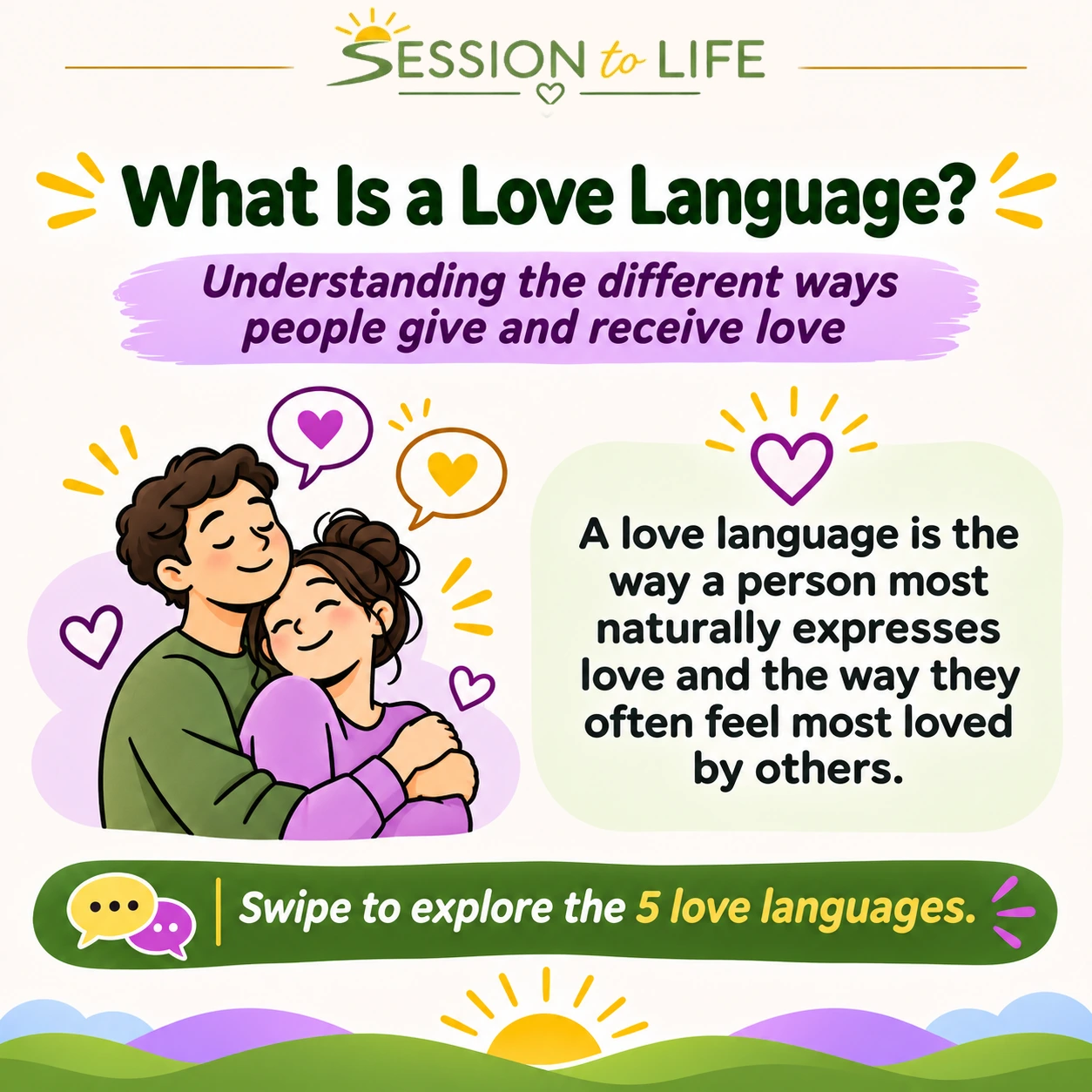
Key ideas
- You can value several forms of care, and your preferences can change with your circumstances.
- Love languages are a popular conversation framework, not a diagnosis, a validated personality test or a complete explanation of relationships.
- Consent, respect, safety and shared responsibility matter more than matching a category.
A starting point for curiosity—not a fixed label
The five-love-languages framework, popularized by author Gary Chapman, names familiar ways people express affection. It can offer words for a useful conversation: “What helps you feel cared for?” But people do not have to fit into five types or have one primary language. Emotional safety, fairness, reliability and the ability to repair after conflict also matter. Use these ideas as possibilities to explore in romantic relationships, friendships and family connections—not as proof of compatibility or a promise that a relationship will improve.
1. Words of affirmation: making appreciation clear
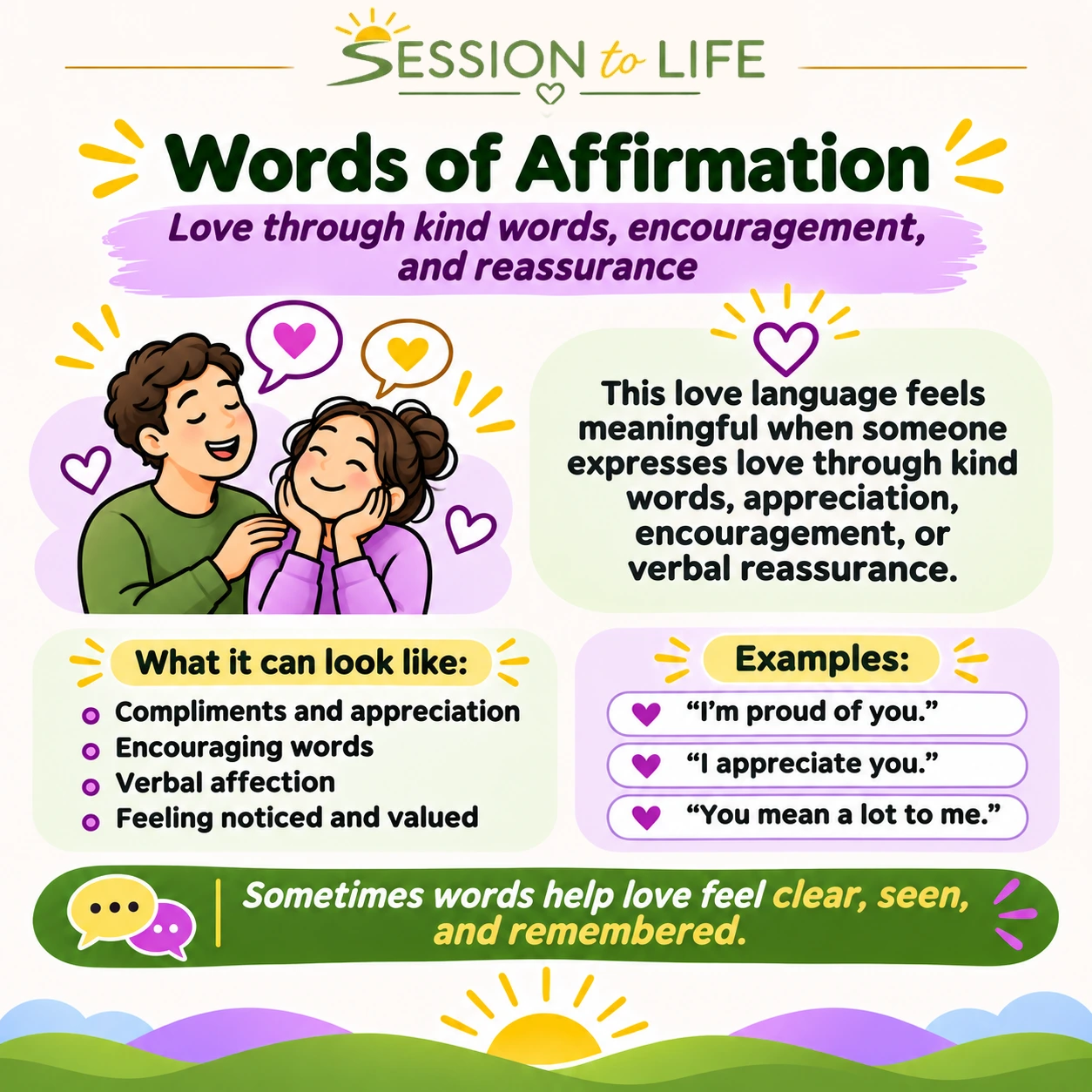
Sincere words can help someone feel noticed: “I appreciate how you listened today” or “You matter to me.” Specific appreciation often says more than a general compliment. Ask whether spoken words, a note or a message feels most comfortable. Reassurance does not need to dismiss difficult feelings; “I hear you” can be more caring than “Don't worry about it.” Words also need to match behavior. Compliments do not erase insults, broken agreements or harm, and nobody owes praise on demand.
2. Quality time: presence that fits real life
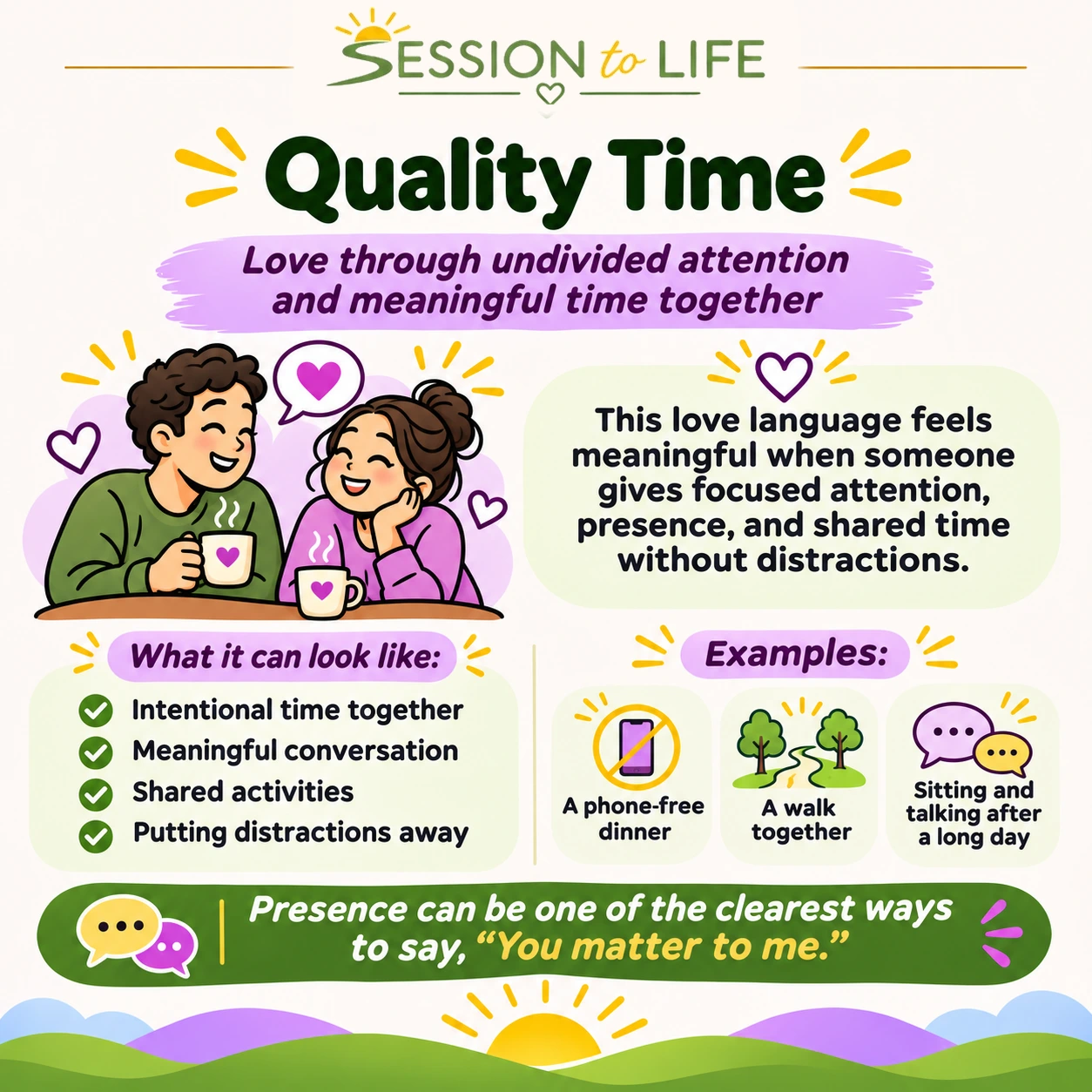
Quality time means shared attention, not constant availability. A short check-in, cooking together or a quiet shared activity may feel meaningful. You might ask, “Would you like ten minutes to talk, or would you rather rest together?” Work schedules, caregiving, disability and distance can affect what is possible. Agree on realistic moments instead of assuming love requires hours together every day. Time apart and friendships outside the relationship remain healthy choices; asking for connection is different from demanding access to someone's time.
3. Acts of service: support without a hidden debt
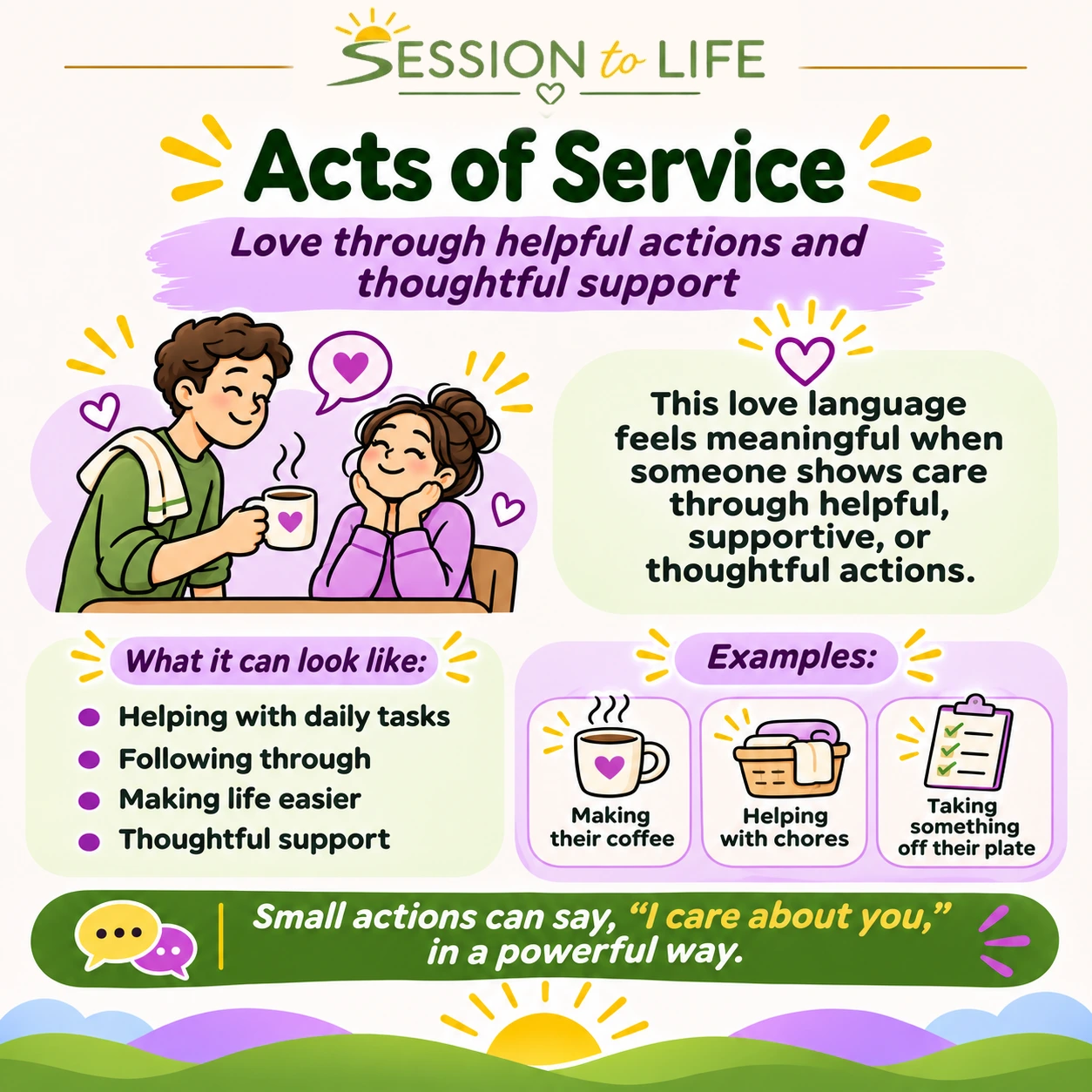
Helpful actions can communicate “You don't have to carry this alone.” Ask what would actually help before taking over: “Would handling dinner tonight make things easier?” Follow through on what you agree to do. In a shared household, routine responsibilities are not favors that earn affection; a fair division of work matters. Support should respect the other person's autonomy and your own capacity. You can care and still say, “I can't do that today, but I can help tomorrow.” Help should not become leverage for touch, gratitude or obedience.
4. Receiving gifts: thoughtfulness, not a price tag
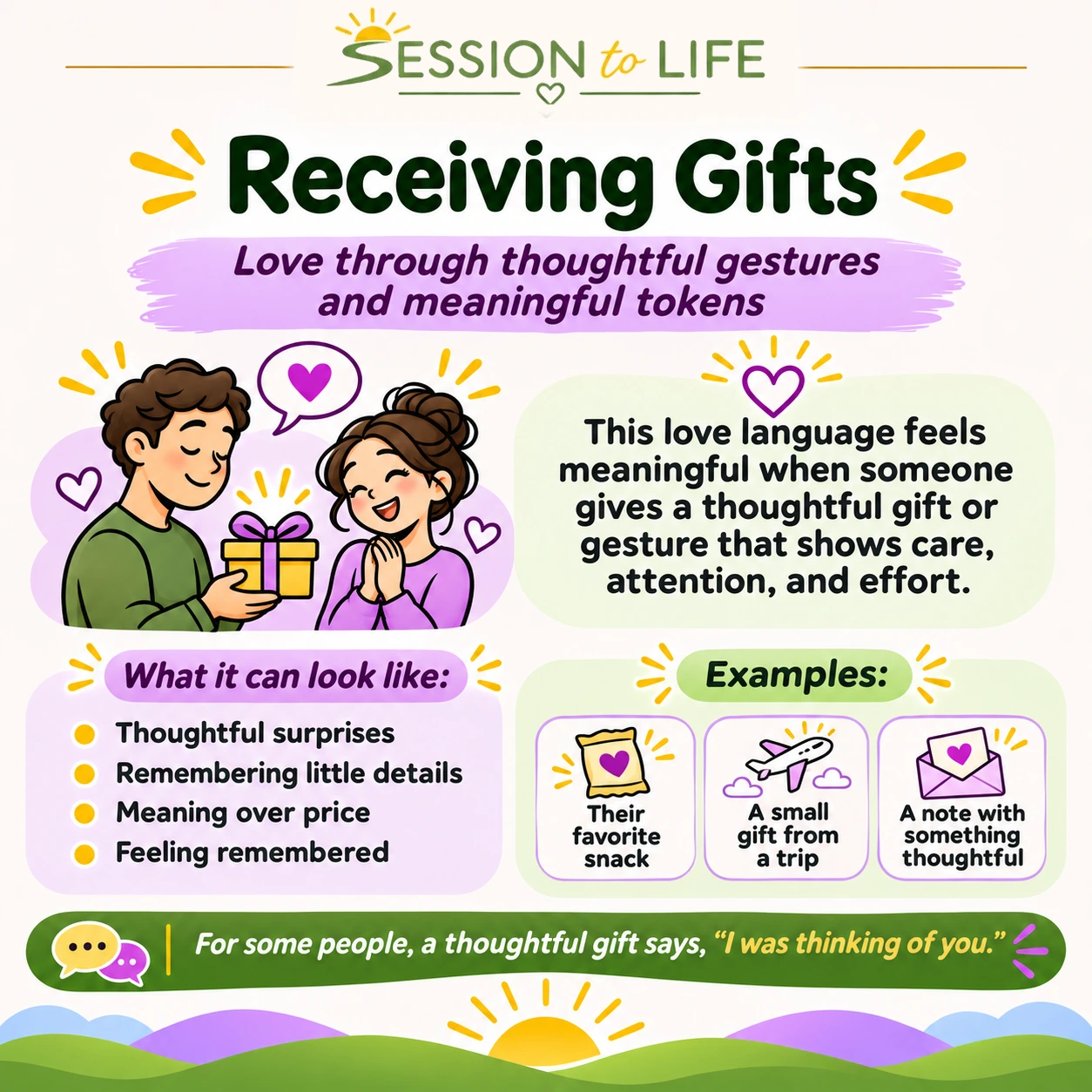
A favorite snack, a handwritten note or a small reminder of a shared memory can say, “I was thinking of you.” For some people, the meaning is feeling remembered—not receiving something expensive. Discuss comfort with gifts and spending, and respect different financial situations. You may decline a gift or prefer no gifts at all. A present never creates an obligation to offer affection, forgive harm or stay in a relationship. If gifts come with pressure or are used instead of accountability, the issue is not a mismatch of love languages.
5. Physical touch: welcome, safe and freely chosen
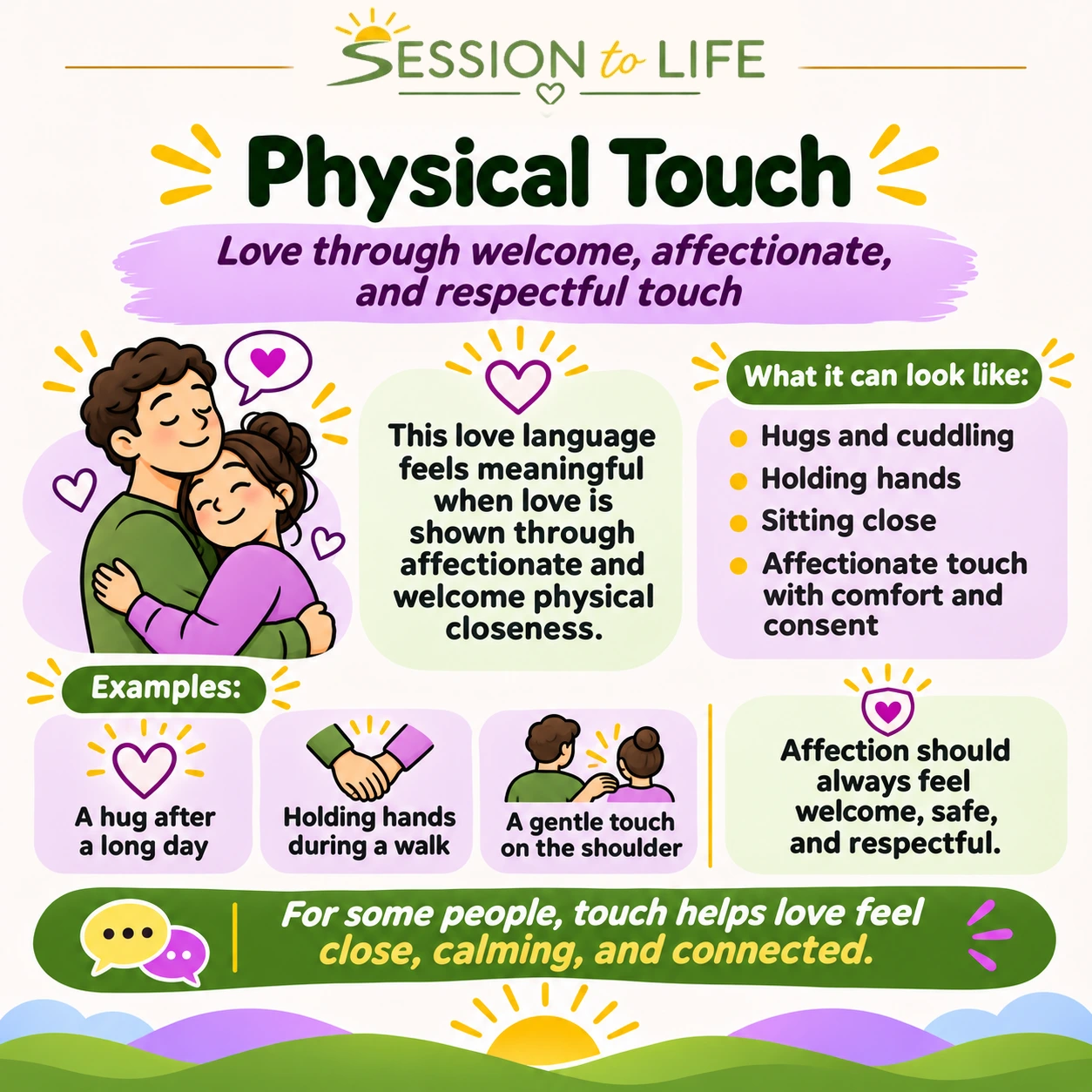
A hug, holding hands or sitting close may feel connecting when everyone wants it. Ask rather than assume: “Would a hug feel good, or would you prefer some space?” Consent is specific, ongoing and can change—even with a long-term partner or family member. Liking hugs does not mean consenting to sexual contact, and touch is never owed because it is someone's preferred language. Sensory needs, culture, past experiences or simply today's mood can shape comfort. No explanation is required for a no. Offer another form of care without guilt, pressure or attempts to make someone tolerate touch.
A real-life example: different gestures, shared understanding
In this hypothetical example, Alex shows care by doing errands, while Sam misses having time to talk. Neither preference proves that one person loves more. Sam says, “I appreciate what you did. I also miss connecting—would a short conversation after dinner work?” Alex replies, “Yes, after I rest for a bit.” They choose a manageable check-in and keep sharing practical responsibilities. This is an invitation, not a formula: the goal is to understand each other while leaving room for limits and different needs.
Optional reflection: what feels caring to you now?
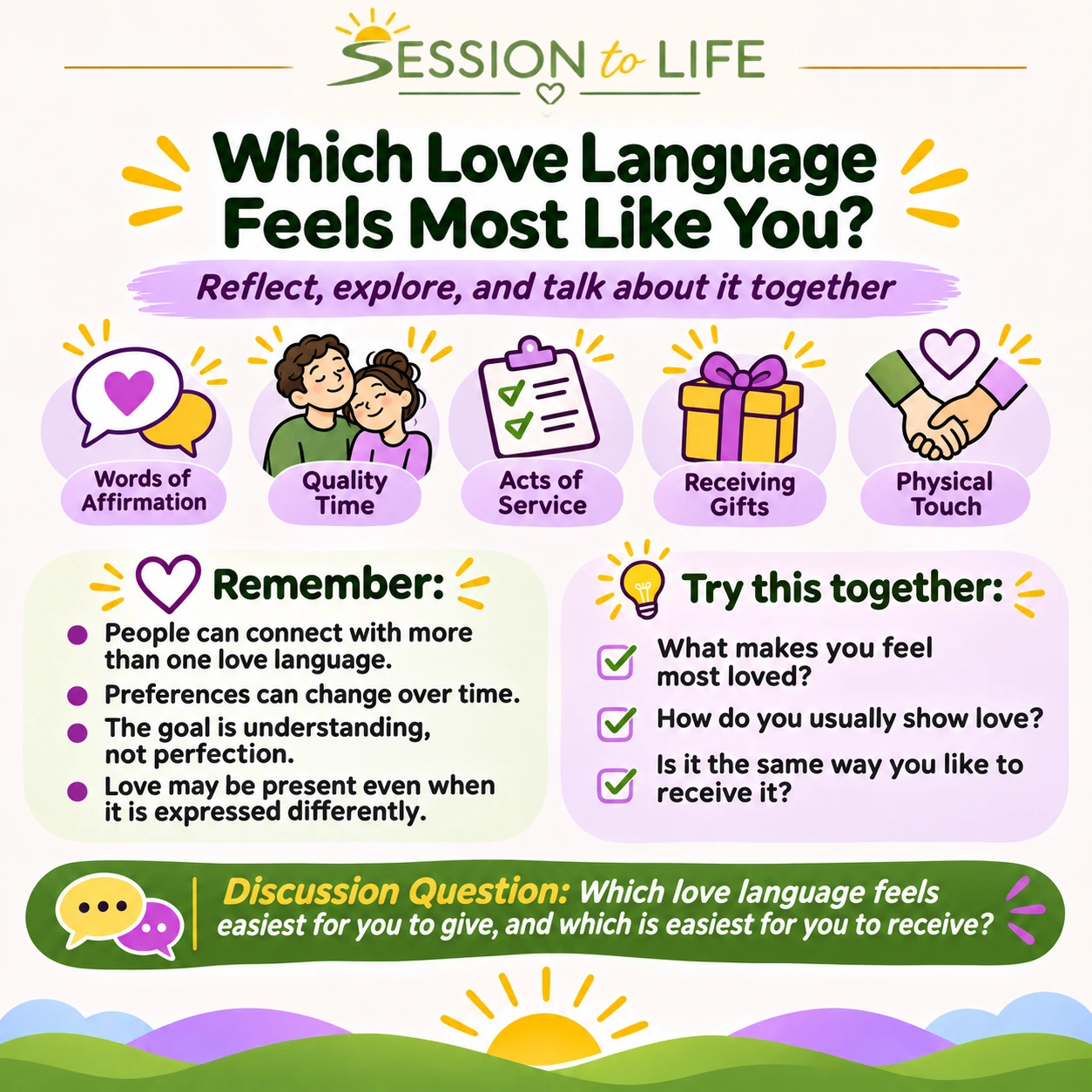
If it feels comfortable, consider: When did I last feel cared for, and what made that moment meaningful? Which gestures do I enjoy giving, and are they the same ones I like receiving? What limits help affection feel safe? Your answers do not need to match anyone else's, and you do not have to choose one category. You can reflect privately or share only what you want with someone you trust. There is nothing to submit here. Pause or skip this reflection if it feels uncomfortable.
When more support may help
If conversations repeatedly leave you feeling dismissed or stuck, a qualified mental health professional may help you explore communication and needs. Threats, coercion, unwanted touch or fear are not love-language differences. In an unsafe relationship, prioritize your safety and seek individualized support from a qualified professional or a local abuse-support service rather than trying to fix things through affection or confrontation. These resources are educational and are not a substitute for individualized mental health treatment.
Try this
If it feels safe, choose one small, realistic gesture of care and ask whether it would be welcome. Listen to the answer without trying to change it. Agree on something that fits both people's time, energy and boundaries, then check in later about how it felt. You can also choose to reflect on your own; participation is optional.
The Story Behind Session to Life: Introducing My First Memoir
By Brenda Guevara Garcia, LCSW. Session to Life began with a belief that conversations about mental health should feel accessible, relatable, and human.
Now in English & Spanish editionsReadDomestic Violence & IPV: Understanding Abuse, Red Flags and Safety Planning
Abuse is a pattern of power and control—not only physical harm. Learn the forms it can take, red flags to notice, and how a personal safety plan can support safety and options.
Read